
Retail Media Privacy and In-Store Screens: Same Creative vs Personalized Prices
Public DOOH loops show everyone the same ad. FTC personalized-pricing comments, New Jersey’s Fair Price Protection Act, and Maryland’s 15,000 sq ft grocery floor are about prices and data—not a screen-ad rate card. Instant Ads still need moderation.
Take 10 Media ·
At a Glance
Retail media decks like to say “in-store is personal.” For screens, that sentence is often sloppy.
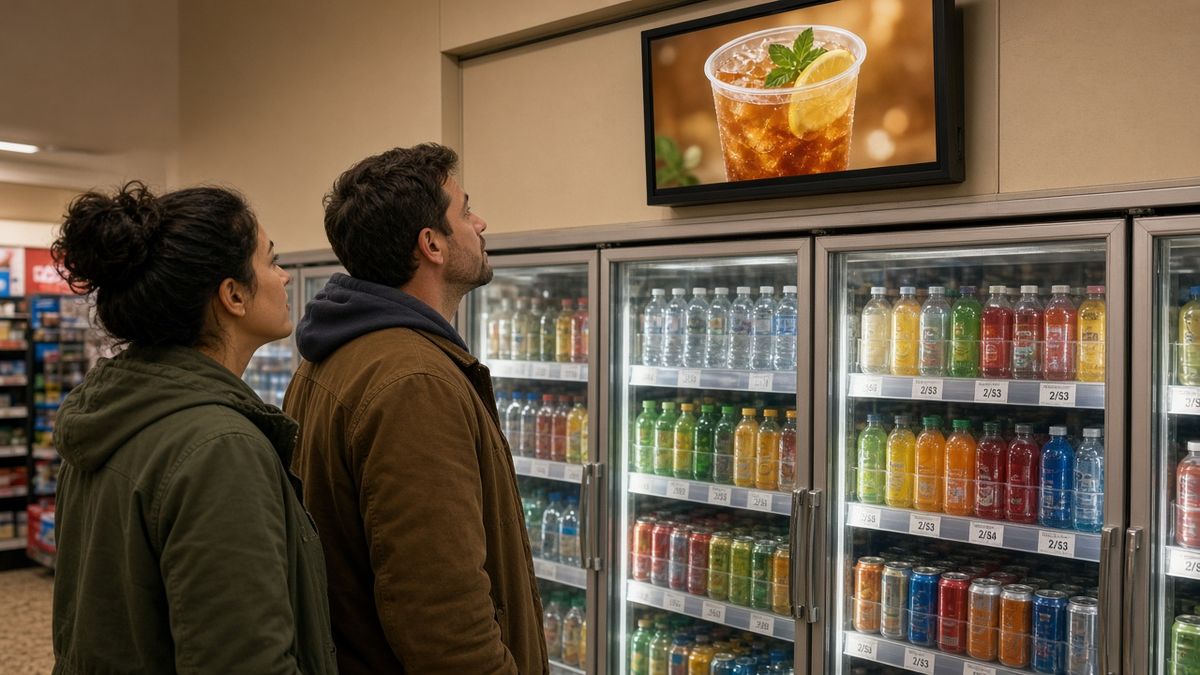
A convenience-store or ATM loop that plays the same booked spot to the next person in line is advertising. A camera, loyalty graph, or electronic shelf label that quotes you a different price for milk is pricing. The FTC’s August 19, 2026 proposed personalized-pricing statement and the 2026 state grocery bills are about the second product.
This post is the operator and local-advertiser cut: how to keep public screens in the media column, what NJ and MD actually scoped, and why Instant Ads still need moderation. The comment-window and Section 5 close-read lives in surveillance pricing vs screen ads. California deletion / DROP is in state privacy laws 2026 for local advertisers. This is not legal advice.
As of this draft, the FTC comment deadline is September 25, 2026 (September 3 extension). Confirm the live date on FTC.gov before you file.
Who This Is For
| Audience | Why this briefing matters |
|---|---|
| C-store and retail hosts | Shoppers expect the tag they see to be the store price. Screen ads sit on a different surface. |
| Local brands | Same-creative flights are media. Do not market them as “FTC-cleared personalization.” |
| ATM operators | Idle-loop ads are a booking question. Personalized transaction pricing is a different fact pattern. |
| Instant Ads hosts | A QR photo is still public. Moderation still applies. |
| Not for | A compliance opinion, an exemption letter, or a green light for camera-based shelf prices. |
Commercial booking stays on self-serve. Minutes on the device in front of you stay on Instant Ads.
Shared Screens vs Personalized Prices
| Surface | What the shopper sees | Personalized price of the SKU? |
|---|---|---|
| Public DOOH / checkout / ATM ad loop | The same booked creative as the next person | No—shared advertisement |
| Instant Ad | The same photo for the purchased minutes | No—still public; review still applies |
| Self-serve flight | The same video on the venues and dates you booked | No—venue-level media |
| ESL / app / loyalty quote | A price that may vary by person or cohort | This is the FTC/state pricing fact pattern when personal data drives the number |
Keep those tracks separate in sales decks. A retailer that uses in-aisle observation to change the price has left “we run video above the cooler.” A host that plays the same 15-second spot has not.
Do not market inventory as “privacy-safe certified” or “surveillance-proof.” No agency has certified networks or CPMs.
FTC Draft: Disclosure and Section 5, Not a Media Ban
The August 19, 2026 press release (updated August 31, 2026) and the proposed statement say, in substance:
- Personalized pricing uses personal data to set a price based on what a firm believes an individual will pay.
- Congress has not given the FTC authority to ban personalized pricing in all circumstances.
- The draft focus is undisclosed or misleading use of personal data under Section 5 (and other laws the FTC already enforces).
- Where consumers reasonably expect a listed store or website price not to vary by personal data, businesses that personalize should disclose that the price is personalized, the basis, and the types of data.
That is a pricing-disclosure briefing. It is not a rule that public DOOH is illegal—or legal. Full citations and the September 25 comment date are in the FTC personalized-pricing post.
New Jersey and Maryland: Grocery Price Statutes, Different Floors
State laws are a separate calendar. Do not flatten them onto every C-store.
New Jersey — Fair Price Protection Act. Morgan Lewis (July 31, 2026) describes the Act as signed July 23, 2026. The surveillance-pricing prohibition for groceries and other defined household goods is effective August 1, 2027. A one-year moratorium on the new use of electronic shelf labels begins February 1, 2027. Existing ESLs are not described as a rip-and-replace mandate; repair/replace of labels already operating at the same place of business is described as permitted. Prepared food from immediate-consumption food service is described as excluded. This is not a DOOH media rule.
Maryland — Protection From Predatory Pricing Act (HB 895). Skadden (May 8, 2026) describes the law as effective October 1, 2026, applying to food retailers operating establishments of at least 15,000 square feet that sell certain tax-exempt food, plus defined third-party food delivery. Typical independent C-stores may be under that floor. Do not claim they are covered. Do not claim they are exempt without measuring the location and reading the statute.
Skadden’s August 28 FTC note also flags Connecticut timing (primarily July 1, 2027 in that secondary source). If a law-firm date and a statute diverge, the statute wins.
Instant Ads Still Need Moderation
Instant Ads are a duration product: scan the QR, upload a photo, pick a live duration tier, pay, and—after review—play on that screen. Everyone nearby sees the same creative.
That is why hosts still run brand-safety review. A public aisle is not a private story. Instant Ads are not a pricing algorithm and they are not a loophole around grocery statutes.
Do not sell “scan to get your personal price on the screen.” That sentence sounds like the FTC’s hypotheticals.
Planned brand video stays on self-serve. Comparison: Instant Ads vs self-serve campaigns.
A Practical Privacy Split for Screen Operators
- Keep ads shared. Same creative, same play, next shopper included.
- Keep prices honest. Shelf and POS prices follow retail policy and applicable law—not the ad server.
- Keep cameras and ESLs on a pricing workstream if you use them for anything other than security or operations. Counsel first.
- Moderate UGC. Instant Ads are public.
- Book commercial time the ordinary way. Venue-level quotes; no invented national CPM. See self-serve CPM.
- Do not claim Maryland coverage for a 2,500 sq ft corner store because a grocery chain is covered.
- Do not claim the FTC banned—or blessed—DOOH.
What This Article Is Not
- Not legal advice and not a substitute for the FTC PDF or the state statutes.
- Not a ban on personalized pricing. The FTC draft says the opposite about a blanket ban.
- Not a claim that every C-store is in scope. Maryland’s described floor is 15,000 square feet.
- Not a rate card.
- Not a full California privacy roundup. That is the SB 923 / DROP post.
Sources
- FTC — Personalized pricing policy statement press release (August 19, 2026; updated August 31, 2026) and September 3 extension (comments due September 25, 2026).
- FTC — Proposed statement.
- Morgan Lewis — New Jersey Enacts Fair Price Protection Act (July 31, 2026; signed July 23, 2026; prohibition August 1, 2027; ESL new-use moratorium February 1, 2027).
- Skadden — Maryland surveillance pricing in the food industry (May 8, 2026; ≥15,000 sq ft; October 1, 2026) and FTC proposed statement note (August 28, 2026).
Next Steps
Hosts who monetize shared screens can treat personalized pricing as a retail-pricing / data project and keep media booking separate: store owners, ATM operators, self-serve.
Shoppers who want a photo on the screen—not a personal milk price—start at Instant Ads.
Related reading: surveillance pricing vs screen ads · state privacy laws 2026 · Instant Ads QR screen advertising · how venues enable self-serve inventory.
Frequently asked questions
Do in-store digital screens raise the same privacy issues as surveillance pricing?▼
Usually no, if the screen plays the same booked creative to whoever is standing there. Personalized or “surveillance” pricing, as used in the FTC draft and several state write-ups, is setting a different price for a good or service from personal data. A shared ad loop is a media product. Mixing cameras or ESLs into per-shopper prices is the pricing product.
What did the FTC say about personalized pricing in 2026?▼
On August 19, 2026 the FTC published a proposed enforcement policy statement on personalized pricing. It is draft Section 5 guidance, not a ban. The Commission says it lacks authority to prohibit personalized pricing in all circumstances. Public comments were extended to September 25, 2026. Details are in our FTC briefing.
What is New Jersey’s Fair Price Protection Act for groceries?▼
Morgan Lewis (July 31, 2026) describes the Act, signed July 23, 2026: a prohibition on using personal data to set or adjust prices for groceries and other defined household goods, effective August 1, 2027, plus a one-year moratorium on the new use of electronic shelf labels beginning February 1, 2027. It is not a DOOH inventory rule.
Does Maryland’s surveillance pricing law cover convenience stores?▼
Maryland’s Protection From Predatory Pricing Act (HB 895), effective October 1, 2026, applies to food retailers operating establishments of at least 15,000 square feet that sell certain tax-exempt food, plus defined third-party delivery. Typical independent C-stores may sit under that floor. Do not assume a corner store is covered—or that it is not—without measuring the location.
Do Instant Ads on store screens need moderation?▼
Yes. Instant Ads are public creatives on a retail or ATM screen. They go through review before play. A QR photo is still a shared message, not a personalized shelf price—and it is still brand-safety work for the host.
Are checkout screens the same as electronic shelf labels?▼
No. A checkout or ATM screen playing a booked ad is a shared media surface. An ESL changes the posted price of a SKU. New Jersey’s described ESL moratorium is about new labels starting February 1, 2027, not about ripping out a media loop.
Does this mean DOOH is exempt from privacy law?▼
No. Same-creative public ads are a different product from personalized SKU prices. Section 5, state consumer-protection statutes, and venue policies can still apply to other facts—collection, QR destinations, loyalty tie-ins. Confirm with counsel.
How should local advertisers book in-store screens without a privacy mess?▼
Book venue-level flights that show the same video to the aisle. Do not bolt a personal-data price onto the creative or the QR. Use self-serve for planned campaigns and Instant Ads for minutes on one screen.
Ready to launch your campaign?
Reach shoppers at the point of decision with self-serve video ads across 1,500+ premium retail and ATM locations.