
Self-Serve CPM for Local Brands on C-Store and ATM Screens
Who should care about self-serve CPM on convenience store and ATM screens—local businesses, agencies, and hosts—and what benefits venue-level pricing unlocks without a fake national rate card.
Take 10 Media ·
At a Glance
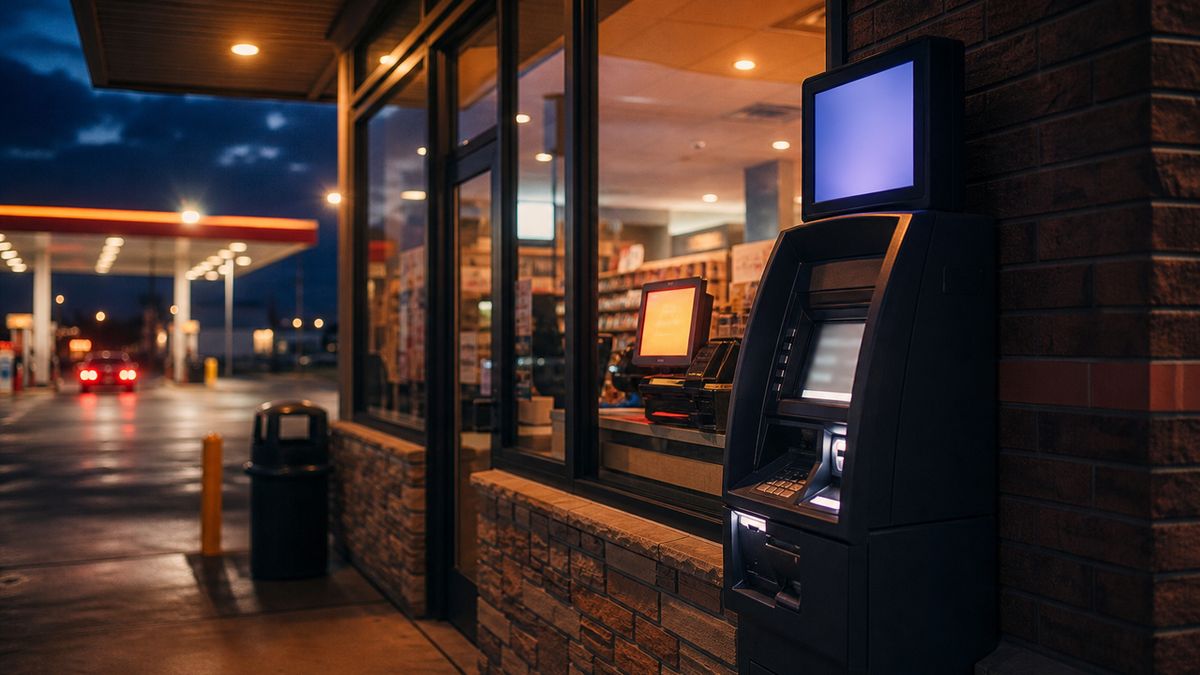
Self-serve CPM is the language local brands use when they ask, “What will digital screens near my customers cost?” On Take 10 Media, the answer is determined at the venue level. Convenience store checkout screens and ATM topper screens quote differently because their foot traffic, dwell times, and physical placements differ.
This guide is designed for the key stakeholders who navigate this landscape: small-to-medium business (SMB) marketers looking to grow their local footprint, agencies buying localized Digital Out-of-Home (DOOH) media, and venue hosts who want to monetize their screens without relying on opaque, bundled package PDFs. By understanding how venue-level CPM pricing works, advertisers can make smarter, data-backed decisions, and hosts can unlock new, automated revenue streams.
Who This Is For
To understand why venue-level pricing is a game-changer, we must look at who benefits from self-serve CPM literacy and why it matters to their specific goals.
| Audience | Why CPM literacy matters |
|---|---|
| Local Businesses & SMBs | Budget a highly targeted, neighborhood-specific flight without paying agency markups or hidden fees. |
| Multi-Location Retailers | Compare different store clusters apples-to-apples to allocate budgets where they have the highest local impact. |
| Agencies & Freelancers | Brief clients with accurate, portal-backed numbers and build localized campaigns in minutes. |
| Store & ATM Hosts | Price digital screen inventory transparently so local buyers can self-qualify and book online. |
| Not for | Impulse buyers looking for immediate, short-term screen time (they need duration-based pricing, not CPM). |
For local businesses, the ability to buy digital screen space on a self-serve basis removes the friction of traditional media buying. Instead of committing to massive, multi-city campaigns, a local business owner can target the exact convenience stores or ATMs that their customers visit daily.
If you are ready to explore the platform, visit our Buyer Hub or read our guide on self-serve advertising for small businesses. If you are a venue owner looking to monetize your space, learn how venues enable self-serve inventory.
Benefits of Venue-Level Self-Serve Pricing
Traditional digital out-of-home (DOOH) advertising has long been dominated by national networks selling massive, bundled packages. These packages often rely on a single, blended “national average” CPM that hides the true value of individual locations. Venue-level self-serve pricing dismantles this model, offering distinct advantages to everyone involved.
For Advertisers: Hyper-Local Precision and Flexibility
- Spend follows geography: Pay only for the specific trade areas you actually serve. If you run a neighborhood dental clinic or a local auto repair shop, a national or city-wide ad package is highly inefficient. Venue-level pricing lets you select the exact C-stores or ATMs along your customers’ daily commute paths.
- No forced five-figure minimums: Traditional media agencies often require substantial minimum spends to initiate a DOOH campaign. Self-serve CPM pricing lowers the barrier to entry, allowing local brands to launch campaigns with budgets that match their business scale.
- Agile testing and optimization: You can run short-term flights, evaluate performance, and shift budget to the highest-performing venues. This test-and-learn approach is standard in digital channels like search and social, and self-serve portals bring that same agility to physical screens.
- Side-by-side format comparison: Compare different screen types—such as C-store checkout displays and ATM toppers—directly within the booking portal to choose the best fit for your creative assets.
The Context of Retail Media and Premium CPMs
When evaluating venue-specific quotes, it is helpful to look at broader industry research. In-store retail media studies consistently show that checkout and point-of-sale (POS) zones command premium CPMs compared to standard aisles or entryways.
This premium is driven by two key factors:
- High dwell time: Customers waiting in line at the register or completing a transaction at an ATM have sustained, focused attention on the screen.
- High purchase intent: Shoppers at the checkout are actively making financial decisions, making it the optimal moment to deliver a call-to-action.
Understanding this industry research context helps advertisers see why a specific checkout screen might quote at a premium. You aren’t just buying passive impressions; you are securing high-impact, point-of-decision attention.
For Store and ATM Hosts: Join-vs-Build in the Retail Media Boom
Retail media is one of the fastest-growing sectors in advertising, as brands seek to reach consumers directly at the point of purchase. However, building a proprietary retail media network (RMN) is incredibly complex.
For independent store owners, regional convenience chains, and ATM operators, the “build” option is practically impossible. It requires millions of dollars in capital, dedicated software engineering, complex programmatic integrations, and a specialized sales force to pitch national brands.
The “join” option via a platform like Take 10 Media solves this problem:
- Instant monetization: Hosts can instantly list their digital screens on a self-serve platform, making their inventory visible to local and regional buyers.
- Automated sales: Advertisers can self-qualify against published rates and book campaigns directly through the portal, eliminating the need for manual sales negotiations or administrative overhead.
- Improved fill rates: Transparent, venue-level pricing attracts local businesses that would otherwise be priced out of digital out-of-home advertising, filling empty ad slots and driving consistent revenue.
For Agencies: Speed and Transparency
- Rapid media planning: Instead of waiting days or weeks for custom publisher decks and RFPs, media planners can log in, select venues, and generate accurate client quotes in real-time.
- Clear strategic positioning: Agencies can easily explain the value of self-serve campaigns compared to managed services, helping lean clients choose the right path. For a deeper dive, see our comparisons on Instant Ads vs self-serve campaigns and self-serve vs managed campaigns.
Use Cases Where CPM Thinking Pays Off
To maximize the impact of venue-level pricing, advertisers should align their campaigns with specific local use cases. Here is how different businesses leverage self-serve digital screens:
| Use case | Target Audience | Why screens + CPM makes sense |
|---|---|---|
| New Restaurant Opening | Neighborhood residents | Saturate C-stores within a 1-to-2-mile radius for a two-week flight to build local awareness and drive immediate foot traffic. |
| Dental or Medspa Clinic | Commuters and local patients | Target ATM toppers and checkout screens along major commuter routes to ensure repeated exposure to high-income local prospects. |
| Franchise Cluster | Regional consumers | Maintain consistent brand messaging while giving individual franchise owners venue-by-venue budget control to support local sales. |
| QSR Daypart Testing | Hungry commuters | Run breakfast promotions on morning-heavy commuter routes, and switch to late-night deals on screens near entertainment districts. |
| Civic & Community Messaging | Local residents | Share hyper-local announcements or public service messages. Note: Ensure all campaigns comply with local regulations, venue host policies, and platform guidelines. |
Point-of-Decision Impact
Broader retail media case studies demonstrate that delivering a message at the exact point of decision—such as the cash register or the ATM screen—leads to measurable sales lift. By thinking in terms of venue-level CPM, local advertisers can treat physical screens with the same strategic rigor they apply to digital ads, ensuring every dollar is spent targeting high-value physical locations.
Instant Ads Are a Different Job
When planning your local advertising strategy, it is critical to understand that Instant Ads are not priced using CPM.
While a self-serve CPM campaign is designed for structured, multi-day flights aimed at building local brand awareness, Instant Ads serve a completely different purpose. They are designed for immediate, short-term sessions on a single digital screen—such as displaying a birthday wish, a marriage proposal, a graduation shoutout, or a real-time community greeting.
Because Instant Ads are highly localized and immediate, they do not use complex impression-based CPM math. Instead, they are priced using simple, flat-rate duration tiers (such as booking a screen for a set number of minutes).
If you are looking to put a personal photo or a quick message on a screen, CPM calculations are unnecessary. Instead, read our guides on who uses Instant Ads and Instant Ad pricing duration tiers.
Explainer: How to Read a Portal Quote
Getting a live quote for your local campaign is straightforward and takes only a few minutes.
- Access the Portal: Open the booking interface at cms.take10media.com/ads.
- Define Your Parameters: Set your target campaign dates (typically up to 90 days in the browser) and select your target geographic area.
- Select Your Venues: Add specific convenience stores or ATM locations to your campaign. The portal will display a running total and venue-specific pricing.
- Review the Estimates: Look at the estimated impressions and CPM-style labels for each selected venue. The media cost will scale directly based on the expected plays at each location.
- Prepare and Launch: Submit your creative assets for approval. Be sure to account for go-live timing so your campaign starts exactly when you need it.
Bottom Line
This guide is designed to build advertising literacy for local buyers and venue hosts, not to serve as a static rate card. Because foot traffic, location, and screen formats vary, there is no single “national average” price. Your actual campaign cost is calculated dynamically in the booking portal based on the specific venues you select.
- For Store and ATM Hosts: Ready to monetize your screens? Visit our Store Owners Hub or ATM Operators Hub.
- For Local Advertisers: Ready to launch your campaign? Explore our Self-Serve Advertising Portal.
Related: ATM screen advertising guide · affordable self-serve ads with analytics
Frequently asked questions
What is self-serve CPM on digital screens?▼
CPM stands for Cost Per Thousand impressions. In self-serve DOOH, venues price inventory using CPM-style rates so you can estimate media costs based on projected plays and impressions in the booking portal.
Who is self-serve CPM advertising designed for?▼
It is built for local and regional advertisers (SMBs, multi-location retailers, agencies) seeking transparent venue-level pricing, and hosts who want to publish rates so buyers can book directly without opaque sales packages.
How much do Take 10 Media screens cost?▼
Rates are venue-specific and shown transparently in the booking portal when you select your locations. There is no single public network-wide CPM or rate card, ensuring you only pay for the specific value of the venues you choose.
Are ATM screens priced the same as convenience store screens?▼
Not necessarily. ATM screens and convenience store checkout displays represent different physical environments, traffic patterns, and viewer behaviors. You can compare live, venue-specific quotes side-by-side in the booking portal.
Is Instant Ads priced using CPM?▼
No. Instant Ads are designed for short-term, immediate personal or community messages on a single screen. They are priced using flat-rate duration tiers (buying a set number of minutes) rather than impression-based CPM calculations.
How do store and ATM hosts benefit from publishing CPM rates?▼
By publishing transparent rates, hosts allow local advertisers to self-qualify and book directly. This improves screen fill rates and generates consistent, passive revenue without requiring manual sales negotiations.
Why do some checkout screens command premium rates in the industry?▼
According to broader retail media research, checkout and point-of-sale zones command premium rates because they represent high-intent, high-dwell-time moments where consumers are actively preparing to make a purchase.
Ready to launch your campaign?
Reach shoppers at the point of decision with self-serve video ads across 1,500+ premium retail and ATM locations.