
Instant Ads or Self-Serve Campaigns? Pick by Who You Are
Decision guide for Instant Ads vs self-serve campaigns—friends and families vs local brands and agencies—benefits, use cases, and when each Take 10 Media path wins.
Take 10 Media ·
At a Glance
Placing content on public screens was once reserved for massive corporate budgets and complex agency contracts. Digital out-of-home (DOOH) networks have changed that, opening up high-definition screens at convenience stores, checkout lanes, and ATM lobbies to everyone.
At Take 10 Media, we offer two distinct pathways: Instant Ads and Self-Serve Campaigns. Both place content on physical screens, but they serve different goals, budgets, and users. Product landings: Instant Ads and self-serve.
Choosing between them is about defining who you are and what success looks like for your scenario. This guide breaks down both options to help you pick your path.
Who Should Choose Which? Pick by Who You Are
Understanding your own profile and objectives is the fastest way to choose your starting path. The Take 10 Media network is highly accessible, but the two buying channels cater to different mindsets:
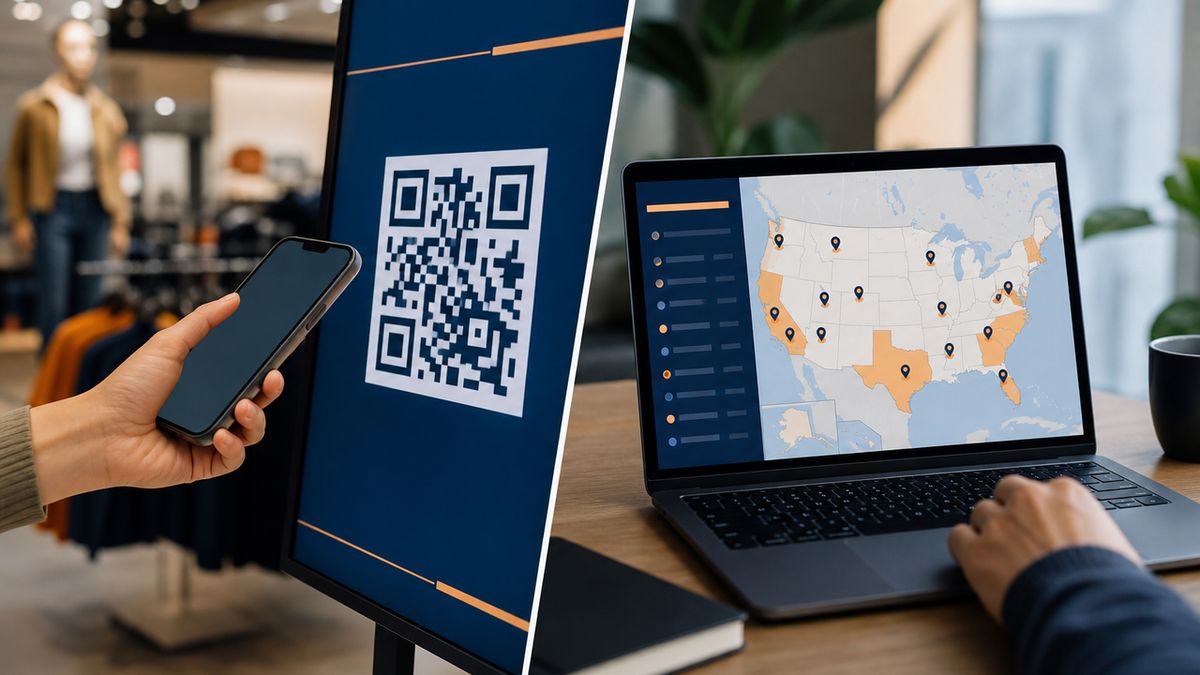
- The Consumer & Milestone Maker: You celebrate impulse moments at a store checkout or ATM with friends or family. Success is a surprise on a friend’s face and a memorable photo to share. Our friction-free, QR-driven Instant Ads are built for your immediate milestone.
- The Neighborhood Merchant & Local Brand: You operate a local restaurant, clinic, or gym seeking sustained foot traffic. You need weeks of consistent visibility. The Self-Serve Campaigns platform lets you select dates, times, and regional screen clusters to build familiarity.
- The Promoter & Pop-Up Creator: You manage events, music releases, or product drops. For same-day crowds, Instant Ads offer rapid single-screen promotion tonight. For multi-week campaigns, Self-Serve Campaigns are far more effective, enabling video scheduling across a regional grid.
- The Agency & Regional Media Buyer: You manage campaigns for franchises or SMB clients, demanding programmatic control, dayparting, and impression reporting. The Self-Serve console is built for your workflow, offering detailed scheduling, custom budget pacing, and dashboard analytics.
- The Host Venue: You host our screens at a retail store or ATM lobby. Steady campaigns provide stable revenue, while impulse Instant Ads unlock high-margin income from foot traffic. Enabling both pathways maximizes overall screen yield.
Here is a quick reference guide to help you decide at a glance:
| If you are… | Choose | Because |
|---|---|---|
| Friends / family / couple at the store | Instant Ads | Impulse photo moment, no ad account |
| Local restaurant, clinic, gym, shop | Self-serve | Multi-day reach in your trade area |
| Agency briefing an SMB | Self-serve (managed help optional) | Budgets, venues, reporting |
| Same-night pop-up promoter | Instant Ads first | One screen, tonight |
| Regional brand / franchise | Self-serve | Clusters of venues, dayparts |
| Store / ATM host | Both enabled | Campaign $ + consumer QR $ |
For a deeper dive into these profiles, check out our audience guides: who uses Instant Ads and self-serve for small business.
Benefits Side-by-Side: Emotional Value vs. Marketing ROI
For Instant Ads, benefits center on emotion, speed, and simplicity. It is the magic of showing up on a public screen without setting up an ad account. The real-time nature turns the physical screen into an active social experience, generating extra engagement when users share photos of their screen moments online.
For Self-Serve Campaigns, benefits focus on efficiency, reach, and precision. This strategic tool delivers high-quality video content to captured audiences during daily routines. Rather than hoping for a single flash, self-serve builds brand frequency by displaying your message multiple times a week to local commuters as they buy fuel, grab snacks, or withdraw cash.
| Benefit / Feature | Instant Ads | Self-serve campaigns |
|---|---|---|
| Emotional / social moment | Excellent | Not the job |
| Neighborhood brand awareness | Weak (one screen) | Excellent |
| No advertiser login | Yes | No (approval required) |
| Analytics dashboard | Session-level | Campaign-level |
| Flexible budgets / CPM thinking | Duration tiers | Venue flights / CPM-style |
| Works with QR offers in creative | Instant QR is the product | Offer QR inside video |
Lean teams often prefer self-serve over agency-managed DOOH for control and working-media spend—read more about this in self-serve vs managed campaigns.
Use Cases: Scenarios in the Wild
To bring these differences to life, let’s explore how various individuals and businesses make use of these two pathways in real-world environments.
Instant Ads Wins
Instant Ads thrive in high-energy, shared, and immediate personal scenarios:
- Surprise Birthdays: Scanning a convenience store screen QR code to upload a photo and caption celebrating a friend standing in line.
- Neighborhood Celebrations: Parents sharing a team photo celebrating a youth sports championship at the corner market.
- Travel Memories: Travelers posting a selfie to a local store screen to mark their journey and capturing a photo of the broadcast.
- Pre-game Fan Excitement: Sports fans grabbing game-day snacks upload a group selfie to show team spirit on checkout screens.
Self-Serve Wins
Self-Serve Campaigns are designed for steady, goal-driven, and commercial objectives:
- The Restaurant Lunch Rush: A local pizzeria scheduling a 15-second pizza video to run weekdays from 11:30 AM to 1:30 PM on screens within 1.5 miles.
- The Dentist’s Local Familiarity: A dental clinic running a month-long campaign on ATM and checkout screens in their primary zip code to capture daily commuters.
- The Gym’s Resolution Saturation: A fitness center booking a multi-venue flight across 15 locations to build cumulative brand memory during peak seasonal interest.
- Local Medical Clinic Communal Presence: A PT office scheduling a month-long targeted route campaign to keep their practice top-of-mind for local commuters.
Explainer: How Each Path Works (Short)
Let’s look under the hood at how the actual process of buying and launching an ad differs between these two options.
| Parameter | Instant Ads | Self-serve |
|---|---|---|
| Entry | Scan QR on screen | cms.take10media.com/ads |
| Creative | Photo (+ captions) | Video |
| Scope | That device | Selected venues / dates |
| Timing honesty | Moderation still applies | Account + creative approval (details) |
Creative specs, pricing mechanics, and moderation workflows differ to support these distinct goals:
1. Creative Specifications
- Instant Ads: Upload standard mobile photos (JPEG/PNG). Our interface formats them automatically with pre-approved, high-contrast layouts.
- Self-Serve Campaigns: Web console supports professional horizontal or vertical video (MP4) and custom graphics for polished brand animations.
2. Pricing and Budgets
We utilize different units of measurement for different goals rather than declaring one “cheaper” or “more expensive”:
- Instant Ads: Priced on a duration-basis for a single machine (e.g., minutes on screen), perfect for one-off consumer shares.
- Self-Serve Campaigns: Priced using campaign-level budgets and programmatic impressions (CPM) for business-scale planning across multiple locations.
3. Review and Moderation
- Instant Ads: Uses automated safety screening and fast human validation to approve and launch your photo in minutes.
- Self-Serve Campaigns: Undergoes standard commercial compliance reviews to ensure assets match guidelines, optimized for scheduled flights rather than impulse launches. Learn more in how long self-serve ads take to go live.
Explore further details: Instant Ads overview · how to buy self-serve video ads · QR in-store · CPM literacy.
Industry Observations on “Sales Lift” and Performance
When exploring digital out-of-home (DOOH) networks, local business owners often see dramatic performance claims. In the real world, general industry observations suggest that planned, location-tied creative correlates with improved brand recall and local search activity by capturing shoppers’ attention at the point of sale.
However, actual results are never guaranteed and depend heavily on business-specific variables rather than the screen network alone:
- Creative Quality: High-contrast videos with clear CTAs perform better than cluttered, low-resolution graphics.
- Product-Market Fit: Aligning your offer with host venue demographics is key. A gym membership fits corner stores better than enterprise software.
- Clear Call to Action: Direct incentives like discount QR codes drive higher conversion than general branding.
- Local Market Dynamics: General neighborhood demand, seasonality, and local competition all influence flight performance.
At Take 10 Media, our role is to provide the reliable physical screen network, robust delivery infrastructure, and user-friendly software tools to get your content seen by the community. We provide the platform; your creative and strategy drive the connection.
Venue Hosts: The Double Monetization Strategy
For store owners and ATM hosts, running both channels maximizes the value of your physical assets. Steady scheduled campaigns provide reliable monthly income, while consumer Instant Ads capture micro-transaction spending from in-store foot traffic. Enabling both pathways on your screens ensures they remain highly engaging, locally relevant, and consistently profitable. You can find detailed instructions in our guide on how venues enable self-serve inventory.
Next Step
Moment in the aisle → Instant Ads (scan the screen QR). Media plan → /self-serve/ or /advertisers/. Hosts enabling both → enable self-serve inventory.
Frequently asked questions
What is the difference between Instant Ads and self-serve campaigns?▼
Instant Ads are QR-driven, short purchases on the screen in front of you—usually a photo from friends or family. Self-serve campaigns book dates and venues in advance with video creatives for local brands.
Who should use Instant Ads?▼
People at the screen: friend groups, families with kids, couples, sports fans, travelers, and same-day promoters who want to display a personal milestone or photo instantly.
Who should use self-serve campaigns?▼
Local businesses, multi-location SMBs, and agencies that need geo-targeted flights, budgets, and analytics across convenience store and ATM screens.
Can I use both?▼
Yes. Brands run planned flights while venues keep Instant Ads on for consumer moments. Different products, same hardware.
Which is cheaper?▼
Different units: Instant Ads price minutes on one screen; self-serve prices days × venues. Compare live quotes in each flow.
How does creative moderation differ between the two formats?▼
Instant Ads undergo rapid, real-time automated and human safety screening to support impulse shares. Self-serve campaigns undergo a deeper commercial compliance review which typically takes slightly longer.
Can I measure the performance of my campaign?▼
Self-serve campaigns provide a complete performance dashboard showing played instances and estimated impressions. Instant Ads provide immediate on-screen validation but do not offer long-term tracking.
Do I need an ad agency to launch a self-serve campaign?▼
No. The self-serve advertising platform is designed for independent operators, local business owners, and small marketing teams to set up and manage their own digital out-of-home campaigns directly.
Ready to launch your campaign?
Reach shoppers at the point of decision with self-serve video ads across 1,500+ premium retail and ATM locations.