
Surveillance Pricing vs Screen Ads: FTC Personalized Pricing 2026
What the FTC’s proposed personalized-pricing policy statement actually says: comments due September 25, 2026, the Commission cannot ban personalized pricing outright, and same-creative public DOOH screens are a different product from undisclosed personal-data prices.
Take 10 Media ·
At a Glance
The Federal Trade Commission’s August 19, 2026 proposed enforcement policy statement on personalized pricing is a disclosure and Section 5 briefing—not a new statute and not a ban. Personalized pricing, in the Commission’s words, is the use of personal data to set prices according to the amount a company believes an individual consumer is willing to spend. The September 3, 2026 extension moved the public-comment deadline from September 18 to September 25, 2026. The FTC public-comments page lists that same due date.
Two sentences from the draft matter for anyone who books or hosts in-store and ATM screens:
- Congress has not given the FTC authority to prohibit personalized pricing in all circumstances.
- Where consumers reasonably expect that a listed price will not vary based on their personal data, businesses that personalize should clearly and conspicuously disclose that the price is personalized, the basis for that personalization, and the types of data used. Failure to make those disclosures is described as likely to be an unfair or deceptive act or practice under Section 5.
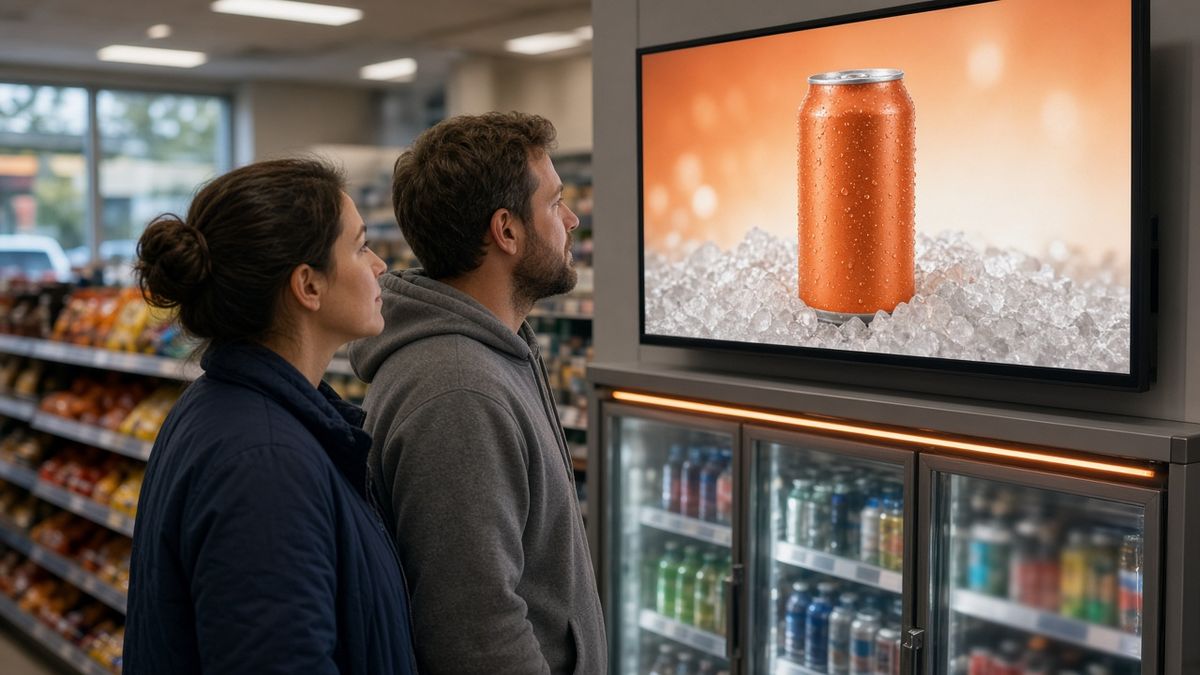
Public digital out-of-home (DOOH) ads are a different job. A convenience-store or ATM screen playing a booked creative shows the same message to whoever is standing there. That is not the same product as an app, loyalty profile, or electronic shelf label that quotes you a different price for milk than the person in the next aisle. This article is a practitioner briefing for US screen operators and local advertisers—not legal advice. Confirm the current text with counsel and the sources linked below.
Who This Is For
| Audience | Why this briefing matters |
|---|---|
| Local brands and agencies | Same-creative flights on public screens are advertising, not a personalized grocery price. Book them as media. |
| C-store and retail hosts | Shoppers still expect the shelf price they see to be the store price—not a camera-tuned quote. Screen ads sit on a different surface. |
| ATM operators | Idle-loop and topper inventory is a commercial booking question. Personalized transaction pricing is a different fact pattern. |
| Venue Instant Ads hosts | A QR photo on that screen is still a public creative. Moderation still applies. |
| Not for | Anyone treating this post as a compliance opinion, an FTC exemption letter, or a green light to run camera-based shelf prices. |
Operators who already list screens can keep commercial booking on the self-serve path. Friends and families who want minutes on the screen in front of them still use Instant Ads. Neither path is a surveillance-pricing engine.
What the FTC Proposed—and What It Did Not
The proposed statement (PDF), dated August 19, 2026, is the primary text. The August 19 press release (updated August 31, 2026 to correct an earlier error) is the short public version. Skadden’s August 28 summary is useful secondary color, not a substitute for the PDF.
As published, the draft says:
- Personalized pricing uses personal data—and conclusions drawn from it, such as willingness to pay or how likely someone is to comparison-shop—to set an individual’s price.
- Consumers reasonably expect that a shelf price in a store, or a website product listing, is the same price any other consumer at that place and time would see. They do not expect prices never to change: supply and demand, local taxes, and products that are inherently individualized (the statement names insurance and credit) still move prices for everyone in the relevant market.
- No blanket ban. The Commission intends to enforce aggressively against deceptive or unfair personalized-pricing practices under Section 5 of the FTC Act (15 U.S.C. § 45) and other laws it already enforces, including—where those statutes apply—the Restore Online Shoppers’ Confidence Act and the Rule Against Unfair or Deceptive Fees.
- Disclosure content. Where consumers reasonably expect a non-personalized price, a business that personalizes should disclose (1) that the price is personalized, (2) the basis for that personalization, and (3) the types of data used. Telling someone only that they have a “specially selected” price is described as likely misleading because it omits the nature and basis of the personalization.
- Deception examples in the draft include representing (or implying) that a price is static or widely offered when it is personalized, failing to disclose personalization when a consumer reasonably believes the price is widely offered, and misleading consumers about the basis (for example, presenting a higher willingness-to-pay price as a loyalty discount).
- Unfairness. A higher personalized price may be a substantial injury that consumers cannot reasonably avoid if the fact or nature of personalization is concealed. The Commission declines at this time to take a position on whether some personalized-pricing practices are unfair even when fully disclosed.
- Data practices. Collecting, using, or disclosing personal data for personalized pricing without adequate disclosures—or without sufficiently verifying consent for that purpose—may also raise Section 5 issues.
- Non-binding. The statement “does not confer any rights on any person and does not operate to bind the FTC or the public.” In an enforcement action, the Commission must still prove a violation of an existing statute or rule.
The PDF’s illustrations (food-delivery quotes, grocery delivery, hotels, rideshare, a retailer charging more because the shopper is already in the parking lot) are labeled as non-exhaustive discussion examples, not findings about named companies. Do not treat them as case law.
Chairman Andrew Ferguson’s quote in the August 19 release matches the PDF’s core limit: the FTC does not have legal authority to ban personalized pricing in all circumstances, but businesses that fail to tell consumers how personal data is used to set a price may violate the FTC Act and other laws the agency enforces.
Comment Window: Use September 25, Not September 18
| Milestone | Source |
|---|---|
| Proposed statement dated | August 19, 2026 (FTC PDF) |
| Press release published | August 19, 2026 |
| Press release correction | August 31, 2026, 2:40 p.m. (FTC) |
| Original comment deadline | September 18, 2026 (August 19 release) |
| Extension announced | September 3, 2026 |
| Current comment deadline | September 25, 2026 (September 3 release; FTC comments page) |
| Commission vote to publish for comment | 2–0 (August 19 release) |
File through the FTC’s comment process for this matter—not through a Take 10 Media form. The statement is still proposed. Do not write as if a final policy has been adopted.
Same-Price Public Screens vs Personalized Shelf and App Prices
The useful contrast for US DOOH is operational, not promotional.
| Surface | What the shopper sees | Personalized price of the SKU? |
|---|---|---|
| Public DOOH / checkout / ATM ad loop | The same booked creative as the next person in line | No—that is a shared advertisement |
| Instant Ad on that screen | The same photo or caption, for the purchased minutes | No—still a public creative; moderation still applies |
| Self-serve flight | The same video across the venues and dates you booked | No—venue-level media, not a per-shopper grocery quote |
| Electronic shelf label / app / loyalty quote | A price for a product or service that may vary by person or cohort | This is the FTC/state fact pattern when personal data drives the number |
The draft statement’s store-aisle example is about the price on the shelf, not the ad playing above the cooler. A retailer that used cameras, device graphs, or purchase history to quote different prices for the same item to different shoppers is in the personalized-pricing conversation. A host that plays the same 15-second spot to everyone in the queue is in the media-booking conversation.
Keep those tracks separate in sales decks. Do not market screen inventory as “FTC-cleared,” “surveillance-proof,” or “policy-approved.” The Commission has not certified networks, creatives, or CPMs.
Venue-level booking mechanics—without an invented national rate card—are in self-serve CPM on C-store and ATM screens. That post is about how quotes appear in the portal, not about Section 5.
Instant Ads Are Still Public Creatives
Instant Ads are a duration product on one screen: scan the QR, upload a photo, pick a live duration tier, pay, and—after review—play on that device. They are not a CPM flight and they are not a pricing algorithm that charges two shoppers different amounts for the same candy bar.
That distinction helps when someone conflates “the screen knew I was there” with “the store charged me a surveillance price.” Instant Ads know which screen you scanned. They do not, as a product, set the shelf price of goods. They still require brand-safe moderation because the audience is a public retail aisle. See Instant Ads vs self-serve campaigns if you need the booking-path split.
Planned brand flights stay on self-serve. Impulse photos stay on Instant. Mixing the two in one sentence (“scan to get your personal price on the screen”) is how operators accidentally sound like the FTC’s hypotheticals.
State Laws Are a Separate Calendar (Do Not Flatten Them)
The FTC draft is federal enforcement guidance under existing statutes. Several states have already enacted different rules with different scopes and dates. Cite them as background—not as a claim that every C-store is covered.
| Jurisdiction | What secondary sources describe | Date to remember | Scope caution |
|---|---|---|---|
| Maryland | Protection From Predatory Pricing Act (HB 895), signed April 28, 2026 | October 1, 2026 | Food retailers at ≥ 15,000 sq ft selling certain tax-exempt food, plus defined third-party delivery. Typical C-stores may be under that floor—do not claim they are covered. |
| New Jersey | Fair Price Protection Act, signed July 23, 2026 | Prohibition August 1, 2027; ESL new-use moratorium begins February 1, 2027 | Groceries and other defined household goods—not a DOOH media rule. Existing ESLs are not described as a rip-and-replace mandate. |
| Connecticut | Consumer surveillance-pricing rules now in P.A. 26-130 (Greenberg Traurig, September 3, 2026) | Primarily July 1, 2027 | Retail sellers and third-party delivery; other online actors may face a disclosure duty. Read the public act—not this table—before you brief a client. |
| New York | Algorithmic Pricing Disclosure Act already requires a specified disclosure when a personalized algorithmic price is shown | In effect November 10, 2025 (GT) | A later “One Fair Price” bill is not treated as law here. Do not say it is signed. |
Skadden’s August 28 FTC note repeats the Maryland / New Jersey / Connecticut effective dates above. If a date in a law-firm alert and a primary statute ever diverge, the statute wins.
This post does not expand into California common-pricing-algorithm antitrust (AB 325) or rent-setting software. Those are different theories.
What This Means for Practical US DOOH
For people who book or host in-store and ATM screens:
- Keep ads as shared creatives. The point of a checkout or ATM loop is that the next shopper sees the same spot. That is the opposite of quoting two people two prices for the same SKU.
- Do not bolt a personal-data price onto the ad. If a creative, QR, or in-store system starts showing your price for a product based on who you are, you have left “screen advertising” and entered the FTC/state pricing fact pattern. Get counsel before you ship that.
- Do not sell “FTC-approved” or “surveillance-free certified” inventory. The draft statement does not certify networks. It describes how the Commission may apply Section 5 to undisclosed personal-data prices.
- Maryland hosts: measure square footage and product mix before you repeat “the new grocery law applies to us.” The 15,000 sq ft food-retailer floor is in the secondary sources cited above. Many C-stores will not meet it.
- New Jersey hosts watching ESLs: the described moratorium is about new electronic shelf labels starting February 1, 2027—not about tearing down a checkout screen that plays booked ads.
- Price and book commercial time the way you already do—venue-level quotes in the portal, without an invented national rate card. Start from self-serve or list screens so local buyers can find them, as in how venues enable self-serve inventory.
Related operator context for ATM devices (official-sign placement, not pricing): FDIC ATM digital signage rule 2026.
What This Article Is Not
- Not legal advice. The FTC PDF, the two press releases, and the state statutes control. This is a practitioner summary for US DOOH and retail-screen hosts.
- Not a ban. The Commission says it lacks authority to prohibit personalized pricing in all circumstances.
- Not a final rule. Comments are open through September 25, 2026. The statement, as drafted, does not bind the FTC or the public.
- Not a claim that DOOH is exempt. Same-creative public ads are a different product from personalized SKU prices. Section 5 and state law can still apply to other facts.
- Not a rate card. No GSC, CPM, impression, or inventory figures appear here because none are part of the policy statement.
- Not coverage of every C-store. Maryland’s food-retailer floor is 15,000 square feet in the sources cited. Do not flatten that onto every independent store.
- Not a substitute for Instant Ads moderation. Public photos still need review. See the Instant Ads hub.
Sources
- FTC — Seeks Comment on Enforcement Policy Statement Regarding Personalized Pricing (August 19, 2026; updated August 31, 2026).
- FTC — Extends Public Comment on Proposed Policy Statement Regarding Personalized Pricing (September 3, 2026; deadline September 25, 2026).
- FTC — Proposed Enforcement Policy Statement Regarding Personalized Pricing (legal-library page) and PDF (August 19, 2026).
- FTC — Public comments page (comment due date listed as September 25, 2026 as of this writing).
- Skadden — FTC Proposes Enforcement Policy Statement on Personalized Pricing (August 28, 2026).
- Skadden — Maryland Becomes the First State to Restrict Surveillance Pricing in the Food Industry (May 8, 2026; HB 895 / ≥15,000 sq ft / October 1, 2026).
- Morgan Lewis — New Jersey Enacts Fair Price Protection Act (July 31, 2026; signed July 23, 2026; prohibition August 1, 2027; ESL new-use moratorium February 1, 2027).
- Greenberg Traurig — Algorithmic Pricing Under Fire (September 3, 2026; Connecticut P.A. 26-130 primarily July 1, 2027).
Next Steps
Counsel and policy teams who want to file should use the FTC comment process and the September 25, 2026 deadline—not September 18.
Retail and ATM hosts who monetize shared, same-creative screens can treat personalized-pricing work as a retail-pricing / data project and keep commercial booking on a separate track. Explore store owners and ATM operators, then point local brands to self-serve.
Shoppers who want a photo on the screen in front of them—not a personalized shelf price—start at Instant Ads.
Related reading: FDIC ATM digital signage rule 2026 · self-serve CPM on C-store and ATM screens · Instant Ads vs self-serve campaigns · how venues enable self-serve inventory.
Frequently asked questions
What is the FTC personalized pricing policy statement 2026?▼
On August 19, 2026, the FTC published a proposed enforcement policy statement on personalized pricing—using personal data to set a price based on what a company believes an individual is willing to spend. It is a draft statement about how the Commission may apply Section 5 of the FTC Act, not a new statute and not a ban on personalized pricing.
When is the FTC personalized pricing comment deadline?▼
The original electronic-comment deadline was September 18, 2026. On September 3, 2026, the FTC extended the period by seven days. Comments are due September 25, 2026. Confirm the live due date on FTC.gov before you file.
Does the FTC ban personalized pricing?▼
No. The August 19, 2026 statement and the accompanying press release say Congress has not given the Commission authority to prohibit personalized pricing in all circumstances. The draft focus is undisclosed or misleading use of personal data under Section 5 (unfair or deceptive acts or practices), plus other laws the FTC already enforces.
What is surveillance pricing vs screen advertising?▼
Personalized or “surveillance” pricing, as the FTC and several state write-ups use the terms, is setting a different price for a good or service based on a consumer’s personal data. Public digital out-of-home screen ads show the same creative to whoever is standing in front of that screen. Those are different products: one is how a retailer prices milk or a ride; the other is a shared advertisement.
Do FTC personalized pricing rules apply to digital out-of-home ads?▼
The draft statement is about how prices for goods and services are set and disclosed—not a media-network rule for DOOH inventory. A same-creative public screen is not, by itself, a personalized shelf price. This post does not claim DOOH is exempt from Section 5 or from state law. Confirm facts with counsel.
Does Maryland surveillance pricing law cover convenience stores?▼
Maryland’s Protection From Predatory Pricing Act (House Bill 895), effective October 1, 2026, applies to food retailers operating establishments of at least 15,000 square feet that sell certain tax-exempt food, plus defined third-party food delivery providers. Typical independent C-stores may sit under that floor. Do not assume a corner store is covered—or that it is not—without measuring the location and reading the statute.
What is the difference between Instant Ads and personalized pricing?▼
Instant Ads buy minutes on the screen in front of you—usually a photo—so everyone nearby sees the same creative. Personalized pricing sets a different purchase price for a product or service using someone’s personal data. Instant Ads still go through moderation; they are not a pricing-algorithm product.
How do public screen ads differ from electronic shelf labels?▼
A checkout or ATM screen playing a booked ad is a shared media surface. Electronic shelf labels change the posted price of SKUs on a fixture. New Jersey’s Fair Price Protection Act includes a one-year moratorium on the new use of electronic shelf labels beginning February 1, 2027. Do not treat a DOOH loop as an ESL, or an ESL as a screen-ad booking.
Ready to launch your campaign?
Reach shoppers at the point of decision with self-serve video ads across 1,500+ premium retail and ATM locations.