
Proving the Lift: How Digital Out-of-Home (DOOH) Drives In-Store Sales
Discover the concrete data, sales lift studies, and attribution frameworks proving how digital out-of-home (DOOH) advertising drives physical retail sales.
Take 10 Media ·
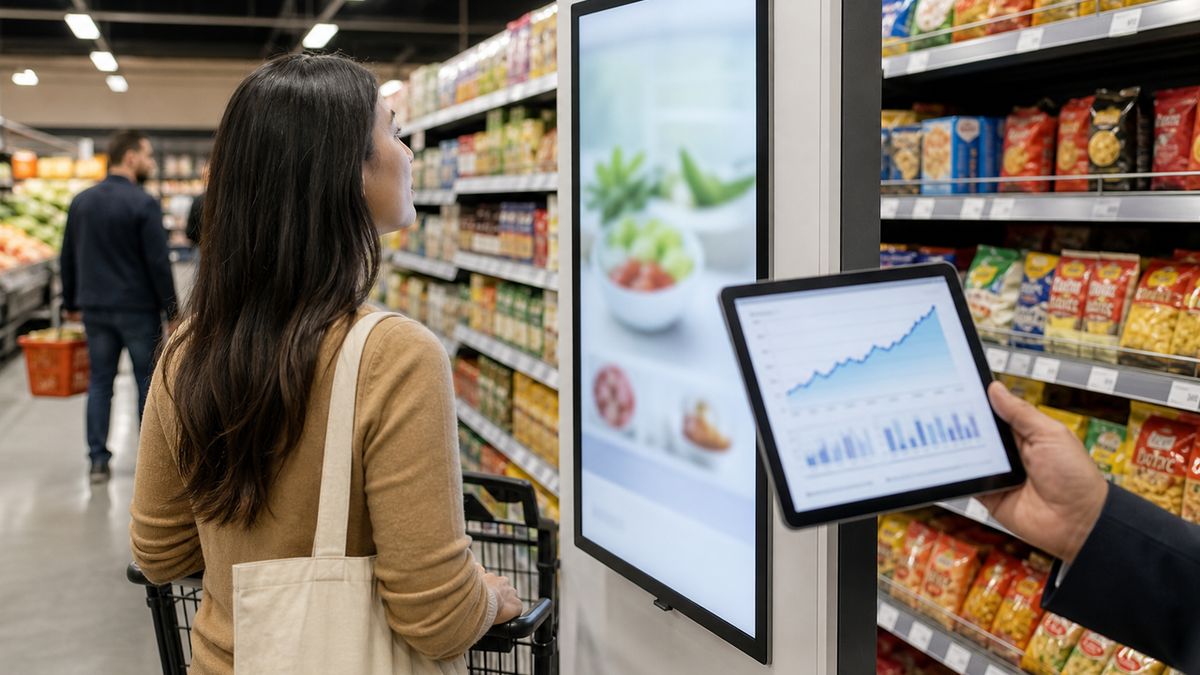
At a glance: For years, physical out-of-home (OOH) advertising was considered a purely top-of-funnel branding play. Marketers assumed that while digital displays built name recognition, proving their direct impact on the bottom line was nearly impossible. That assumption is no longer valid. Thanks to advanced attribution models, sensor-based real-time intelligence, and robust matched market methodologies, the marketing industry now has hard data proving that digital out-of-home (DOOH) directly drives in-store sales. In this article, we look at several industry-leading case studies that demonstrate how CPG giants and major retailers are converting digital screen impressions into physical cash register revenue. While these are broad retail industry studies rather than Take 10 Media performance claims, they highlight the tremendous potential of in-store advertising that brands can tap into using Take 10’s convenience store and ATM video network.
The Measurement Evolution: Moving Beyond Impressions to Outcomes
Historically, measuring the effectiveness of outdoor ads relied on broad estimates of roadside traffic or generic foot traffic patterns. While these metrics provided an idea of “potential reach,” they did not tell advertisers whether anyone actually bought their product because of the ad.
Today’s retail media ecosystem has evolved to solve this challenge. By connecting in-store screen exposure with actual point-of-sale (POS) transaction data, retail media networks and brands can isolate the exact sales lift driven by digital displays.
This is particularly critical for consumer packaged goods (CPG) brands, where the purchase decision is frequently made on impulse while browsing store aisles. By placing dynamic video creative directly along the path to purchase, advertisers can intercept consumers at the most influential moment.
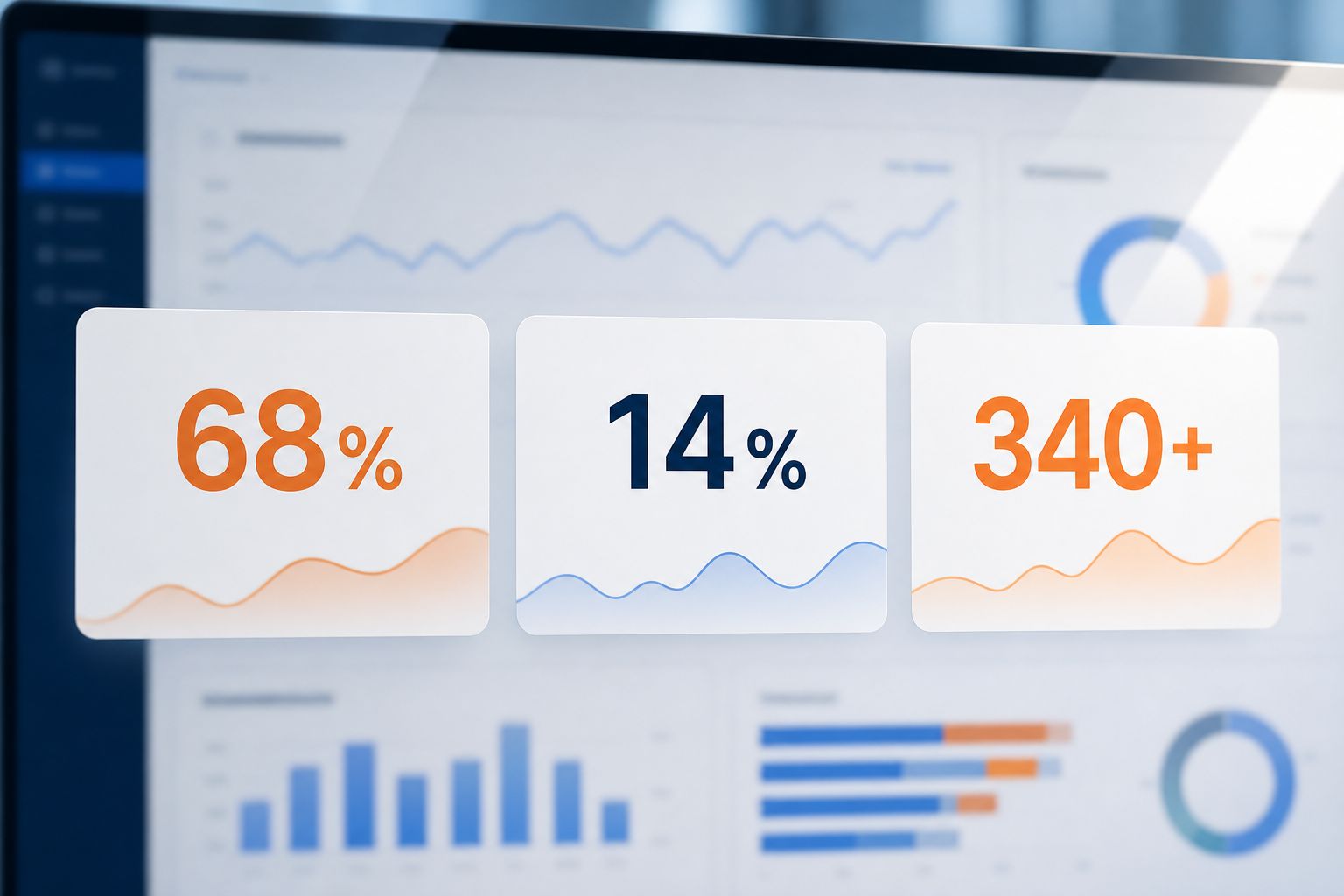
Case Study 1: How Sensodyne Achieved a +68% Sales Uplift in Carrefour UAE
One of the most impressive demonstrations of in-store digital advertising power comes from a collaborative campaign executed in the Middle East. Haleon’s leading dental care brand, Sensodyne, partnered with Publicis Middle East and Majid Al Futtaim’s Precision Media to run a high-tech audience-targeted campaign inside Carrefour hypermarkets.
As published by Advertima, the campaign utilized AI-powered sensor technology on in-store screens to detect real-time shopper demographics and trigger targeted creative content only when relevant buyer segments were in front of the screens.
To measure the true impact of this audience-targeted approach, the partners set up a rigorous A/B test across 23 hypermarkets:
- The Control Group (Standard Loop): In half of the stores, the screens ran standard loop-based advertising, where the creative was played repeatedly regardless of who was watching. This standard loop achieved a highly respectable 30% sales uplift.
- The Test Group (Audience AI): In the other half of the stores, the Advertima sensor-based intelligence triggered ads dynamically in real time. The results were extraordinary: the AI-optimized playback drove a 68% sales uplift in just 20 days.
As detailed in the full Sensodyne Carrefour UAE Case Study, this test proved that while in-store screens are naturally powerful, combining high-visibility placements with real-time audience relevance significantly reduces wasted reach and maximizes conversion outcomes.
Case Study 2: Albertsons and Mondelēz International Unlocking 14% Sales Lift
Another landmark study emerged from a partnership between grocery giant Albertsons Cos. and global snack food manufacturer Mondelēz International. Looking to drive household penetration and incremental sales for its Sargento Cheese Bakes snack crackers, Mondelēz integrated in-store digital display screens across 116 Albertsons banner stores.
To evaluate the success of the campaign, Albertsons Media Collective deployed a new, highly sophisticated “Matched Market Incrementality” framework. This model goes far beyond basic correlation, comparing POS transaction data from test stores exposed to the digital signage ads against a carefully balanced control group of stores with no media exposure, adjusting for nearly 60 local variables to eliminate bias and isolate the advertisement as the sole driver of sales.
According to the results reported by Retail Media World, the inclusion of in-store digital displays delivered:
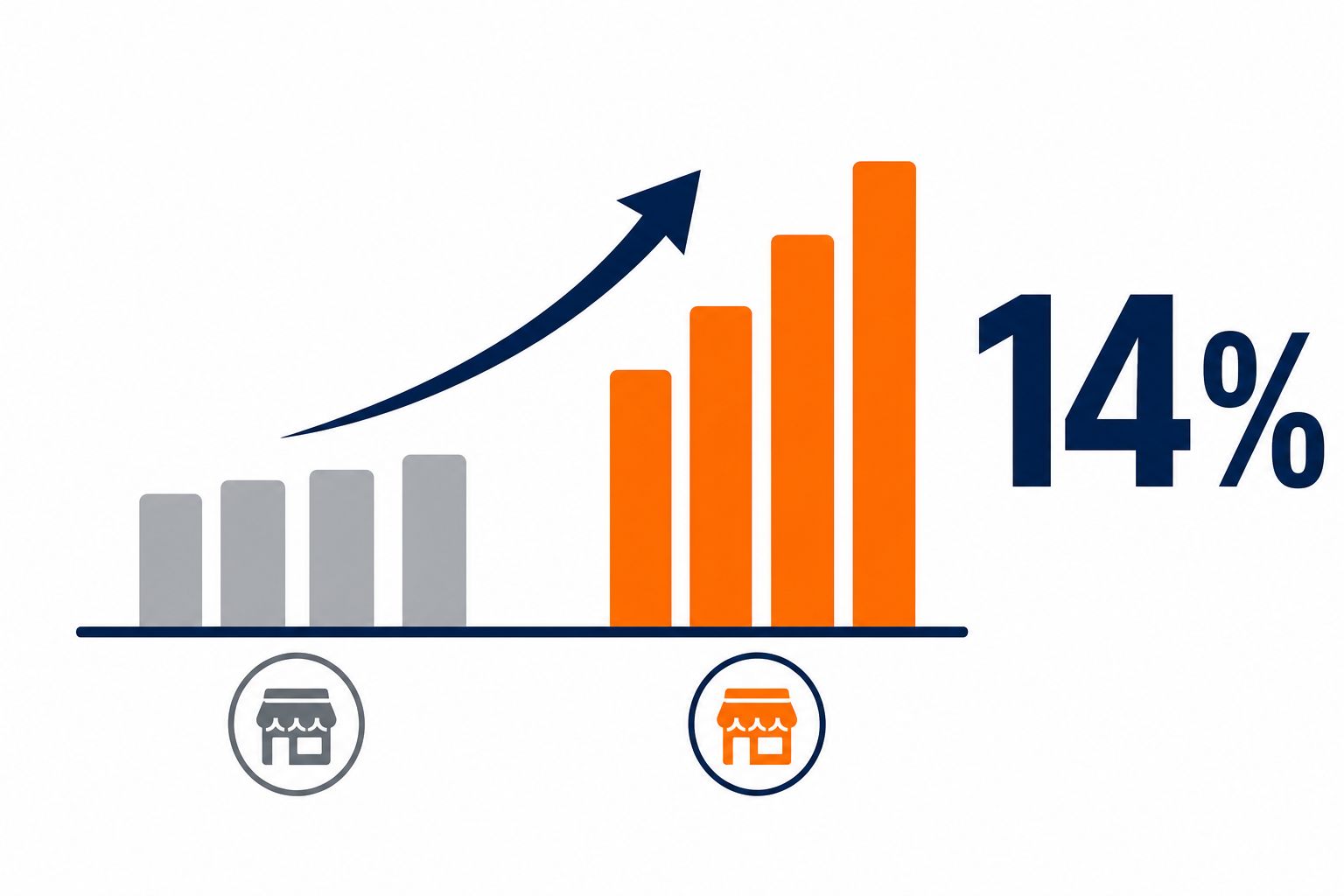
- A 14% incremental sales lift directly attributable to the screens.
- Over 5.5 million ad impressions during the campaign flight.
- A $2.41 incremental return on ad spend (iROAS), proving that the screens generated highly profitable net-new sales.
- A 1.5% increase in conversion rates across the test stores.
This case study is a massive milestone for the retail media sector because it demonstrates that matched market incrementality can provide brands with a clear, statistically validated measure of true physical store lift.
Roadside to Retail: Clear Channel Outdoor and NCSolutions Partner on Sales Effect
The verification of DOOH sales lift isn’t limited exclusively to in-store checkout displays. Major national media owners are also partnering with specialized research firms to prove that roadside digital billboards and transit displays influence brick-and-mortar sales outcomes.
For example, Clear Channel Outdoor (CCO) regularly collaborates with NCSolutions (NCS)—now part of Circana—to run “Sales Effect” studies for consumer packaged goods brands. By matching households exposed to digital out-of-home campaigns with purchasing data from retail loyalty cards, these studies examine changes in actual purchase behavior between exposed and unexposed groups.
In several prominent studies, CCO and NCS have proven that DOOH displays on major roadways, transit shelters, and airport terminals significantly increase retail product sales:
- In a study for a major established dish detergent brand, matching exposed household segments revealed a measurable increase in shoppers buying the brand within one week of exposure.
- In another study conducted for a light beer advertiser, the Sales Effect study revealed that 36% of all purchases among the exposed DOOH audience came from incremental or new customers, with an overall sales lift that was double the category benchmark for typical beer campaigns.
These results highlight that out-of-home advertising serves as a powerful, continuous connector. Whether a shopper sees a digital display on their morning commute or stands right in front of an in-store retail media screen, the visual stimulus keeps brands top-of-mind.
Clear Channel has since connected its RADAR exposure and delivery data to LiveRamp’s Cross-Media Intelligence and TransUnion’s MMM and MTA tools; we cover what was announced, and what it does not show, in Clear Channel RADAR, LiveRamp, and TransUnion: what OOH measurement integrations mean for local DOOH buyers.
Not every big retailer is putting screens in stores yet
Store screens are not a given even at the largest US chains. In October 2026, Adweek reported that Target is considering in-store digital screens, but only in a way that wouldn’t disrupt the customer experience. At a Roundel event for Target’s advertising partners in New York, Jenny Holleran, VP of Roundel’s partner solutions group, said that for now brands should reach in-store shoppers through Target’s e-commerce platforms: the app and mobile site, which she said 60% of Target’s shoppers use while in the store. That is a consideration, not a launch.
How to read any “sales lift” claim
The case studies above are vendor and retailer results. If you want to check lift on your own campaign, the method is the same at any scale: a baseline period, exposed stores compared with matched control stores, and a readout window agreed before launch. The step-by-step version, including the 28-day pre/post windows in IAB Europe’s September 2026 draft, is in matched-market testing for in-store ads.
The Take 10 Media Advantage: Capturing Point-of-Decision Intent
As these industry-wide studies prove, there is an undeniable link between digital out-of-home exposure and real-world sales outcomes. The closer the advertisement sits to the actual point of purchase, the higher the likelihood of conversion.
This is why Take 10 Media focuses on building a highly strategic, low-friction digital network inside local neighborhoods. With over 1,500+ active locations across convenience store environments and high-traffic ATM screens, we position your video creative directly at the “point of decision.”
Our network provides several unique advantages that mirror the success factors of the Carrefour and Albertsons studies:
- True Point-of-Decision Placement: Convenience store shoppers are typically in-store for immediate needs. Placing a screen directly at the checkout aisle or counter engages them when they are holding products and deciding on last-minute impulse additions. To learn more about this dynamic, read our in-depth article on the power of point-of-decision marketing and in-store video.
- Unmatched Dwell-Time and Viewability: Traditional online ads are easily skipped, blocked, or scrolled past in seconds. In contrast, when consumers stand in line or retrieve cash from an ATM, they have extended, captive dwell time. This high focus is analyzed further in our piece on capturing foot traffic with self-serve display ads in retail.
- Agile, High-Control Campaign Setup: You don’t need a multi-million dollar budget or an enterprise agency to tap into this power. Through Take 10’s self-serve platform, advertisers can launch campaigns immediately, control their budget, and track total delivered plays and impressions through an easy dashboard. Explore how we make this possible in our overview of affordable self-serve ads with real-time analytics.
The data is clear, and the tools are here. Programmatic DOOH has officially graduated from a passive brand-building medium into a highly measurable, performance-driven driver of brick-and-mortar sales. By taking advantage of Take 10’s automated network, you can put your brand’s video assets on more than 1,500+ active retail screens, engaging your buyers exactly when they are ready to convert.
Frequently asked questions
Does digital out-of-home (DOOH) advertising actually drive physical sales?▼
Yes. Major industry case studies show that DOOH campaigns can drive substantial in-store sales lift. For example, a campaign for Mondelēz International on Albertsons' in-store screens achieved a 14% sales lift, while an AI-triggered campaign for Sensodyne in Carrefour UAE drove a 68% sales uplift.
What is incrementality in retail media measurement?▼
Incrementality measures the net-new sales directly caused by an advertisement, isolating them from purchases that would have happened anyway. This is typically measured using a matched market framework that compares sales in stores with ad exposure (test) against stores without ad exposure (control).
How do in-store screens compare to traditional roadside billboards?▼
While roadside billboards are excellent for broad name recognition and top-of-funnel awareness, in-store screens sit at the absolute point of decision. They engage shoppers who are already in-store, with wallets in hand, making them highly effective for converting immediate impulse purchases.
How does Take 10 Media track campaign performance?▼
Take 10 Media’s self-serve portal features a real-time performance dashboard. Advertisers can monitor active screens, total play counts, and budget delivery, ensuring full transparency and performance control throughout their campaign flights.
Do advertisers need custom attribution frameworks to use Take 10 Media?▼
No. While enterprise brands often run sophisticated matched market lift studies with partners like Circana or NCSolutions, smaller advertisers can use Take 10’s real-time portal to run agile campaigns and track physical sales increases regionally against their specific campaign flight dates.
Ready to launch your campaign?
Reach shoppers at the point of decision with self-serve video ads across 1,500+ premium retail and ATM locations.