
The Power of Point-of-Decision Marketing: How In-Store Video Drives Sales
Understand the psychology behind point-of-decision marketing and how digital in-store video ads influence shopper behavior when they are ready to buy.
Take 10 Media ·
At a Glance
The final feet of the consumer journey are the most critical. While digital ads and billboards can build brand awareness over weeks, the point-of-decision is where interest translates into an actual transaction. In this article, you will explore the fascinating science of point-of-decision marketing and discover why in-store digital video ads wield such incredible influence over consumer buying patterns. Learn how to craft high-impact campaigns that reach shoppers at the checkout counter and drive immediate impulse purchases.
The Psychology of the Ready-to-Buy Consumer
To understand why point-of-decision marketing works, we must first look at the psychological state of a retail shopper.
When a customer is walking through a convenience store or standing at an ATM terminal, they are not passively scrolling through a social media feed while laying on a couch. They are physically active, alert, and engaged. They have already committed to a physical trip, entered a retail location, and prepared their payment method.
This state of mind is characterized by high transaction intent.
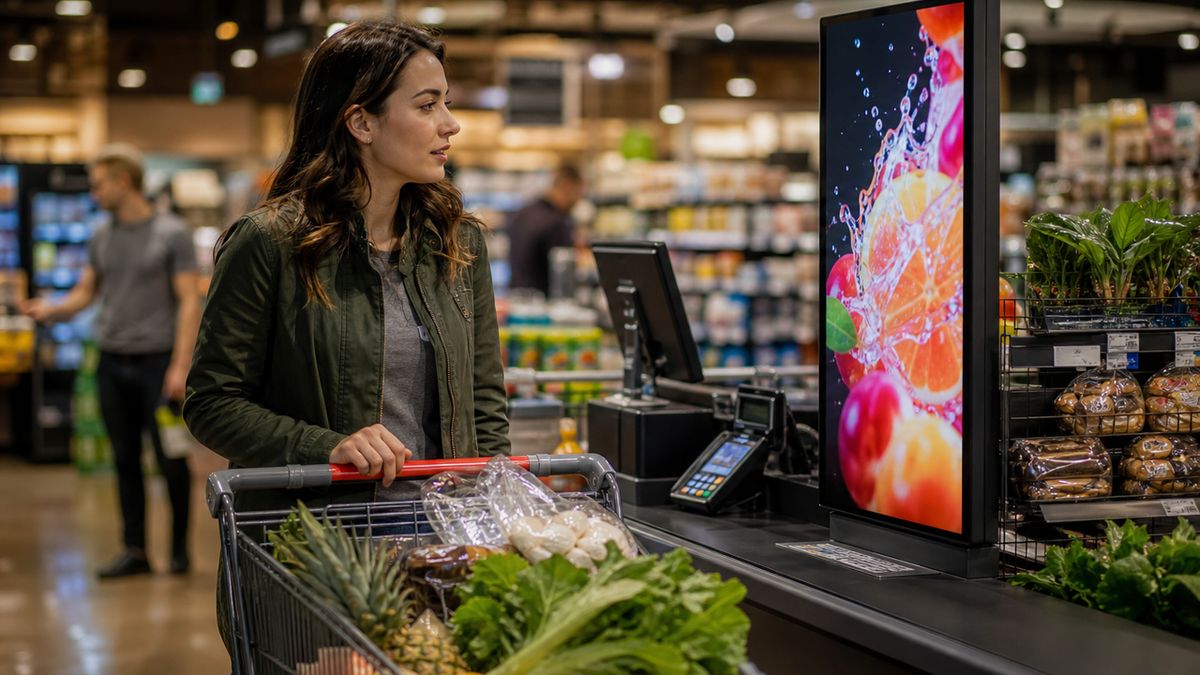
By placing high-definition vertical video screens directly in their field of view at the checkout register or atop ATMs, Take 10 Media captures this focused attention. When a shopper sees a compelling 10-second to 15-second video, their cognitive barrier is significantly lower. Because they are already standing feet away from the products and have their wallet in hand, the path from “attention” to “purchase” is reduced to seconds.
For local businesses and regional brands looking to leverage this psychology, utilizing the Take 10 Media self-serve portal is the fastest way to get your creatives onto these highly persuasive screens.
Why Video Succeeds Where Static Signs Fail
In many retail environments, owners still rely on traditional cardboard standees, counter mats, or hanging window posters. While these materials have their place, they suffer from a major psychological phenomenon known as ad blindness.
Because consumers are bombarded with hundreds of static signs every day, their brains automatically filter them out.
Dynamic digital video breaks through this sensory filter:
- Motion Captures the Eye: Human evolution has wired our brains to notice movement. A dynamic video on a high-brightness screen naturally draws focus, even from the periphery.
- Storytelling in Seconds: A video can display multiple product angles, demonstrate usage, and deliver a call-to-action in a 10-second loop. A static sign only gets one shot.
- Dayparting Adaptability: Unlike printed posters that cannot be changed without manual labor, digital signage can adapt in real-time. We can promote hot coffee in the morning and cold beverages during the hot afternoon hours, matching the consumer’s physiological needs at that exact hour.
To understand why a self-directed digital strategy offers superior agility and cost-efficiency over traditional agencies, check out our comparison of self-serve advertising vs. managed campaigns.
Point-of-Decision Marketing in Action: Real-World Use Cases
How can local advertisers put these psychological triggers to work? Let us look at three common, highly successful point-of-decision marketing plays:
1. The Local Merchant Cross-Promotion
A local dental clinic or auto-repair shop wants to reach families in their immediate zip code. By running a video ad on convenience store screens and ATM toppers within a 3-mile radius, they position themselves as the friendly, nearby choice. When shoppers withdraw cash, they see the ad and think, “Oh, I actually need to book that service, and they are right around the corner.”
2. The In-Store Impulse Boost
An energy drink brand wants to increase sales at a specific gas station chain. They launch an ad campaign featuring a sleek, high-energy video of their cold beverage being cracked open. A customer standing in line sees this refreshing visual, steps out of line for 10 seconds, grabs a can from the cooler, and adds it to their basket.
3. The Digital-to-Physical Bridge
An online local service or brand places a prominent QR code on our high-definition screen. Customers standing in line have a few moments of dwell time. They pull out their smartphones, scan the screen, and instantly download a coupon or register for a local service.
To see how real-time performance analytics back up these campaigns and verify every single play on our screens, explore our deep dive into affordable self-serve ads with analytics.
Designing High-Conversion Point-of-Decision Video Creatives
If you want your video ads to drive massive sales, your creative assets must be tailored for the retail environment. Our most successful advertisers design their files using these core principles:
- Immediate Impact: You have less than 3 seconds to hook the viewer. Put your strongest visual and your brand name right at the beginning.
- Large, Readable Text: Since some customers may be a few feet away, use bold fonts, clean typography, and high contrast.
- Simple, Direct Call to Action (CTA): Keep it dead simple. Examples like “Scan to save $5” or “Ask the cashier” are highly actionable and easy to execute.
       +-------------------------------------------------+
       |         ANATOMY OF A HIGH-CONVERSION AD         |
       +-------------------------------------------------+
       | 0-3 Seconds: Hook & Brand Name (Instant impact)  |
       | 3-8 Seconds: Value Proposition & Product Focus  |
       | 8-15 Seconds: Simple, bold CTA & QR Code        |
       +-------------------------------------------------+
Tap into the Ultimate Consumer Moments
The moment of purchase is a powerful window of opportunity. By placing your brand message right at the point-of-decision, you don’t have to worry about ad blockers or busy digital algorithms. You are there in the real world, at the exact moment cash is changing hands.
Ready to see how point-of-decision video ads can scale your local business? Log into the Take 10 Media self-serve portal today, select your high-traffic checkout and ATM screens, and start driving immediate, real-world sales.
Frequently asked questions
What is point-of-decision marketing?▼
Point-of-decision marketing refers to advertising strategies targeted at consumers at the exact physical location and moment they are making a purchasing decision, such as checkout lanes, store entrance displays, or ATM transaction points.
Why is in-store video advertising so effective?▼
In-store video advertising is highly effective because it leverages active consumer attention in a distraction-free physical environment. It capitalizes on high shopper intent, visual motion, and psychological proximity to products, driving immediate conversion.
How does digital out-of-home (DOOH) advertising compare to online ads?▼
Unlike online ads that can be easily blocked, skipped, or ignored, in-store DOOH screens are physically unblockable and deliver high viewability. They reach consumers when they are physically present in-store, in a buying mindset with their wallets ready.
What types of businesses benefit most from point-of-decision ads?▼
A wide variety of businesses benefit, including food and beverage brands, local services providers (real estate, insurance, home repair), automotive shops, entertainment venues, and adjacent local retailers seeking to capture nearby foot traffic.
How do I measure the ROI of my in-store video campaign?▼
You can measure ROI through a variety of tracking mechanisms, such as custom promo codes, unique QR codes featured on the screens, dedicated SMS text-to-redeem campaigns, or by monitoring overall sales lifts during the campaign period.
Can I customize my campaign's schedule to match peak shopping hours?▼
Yes. Our self-serve platform allows you to schedule your ads during specific times of day (dayparting) or on specific days of the week, aligning perfectly with peak shopping periods and maximizing your budget's impact.
Ready to launch your campaign?
Reach shoppers at the point of decision with self-serve video ads across 1,500+ premium retail and ATM locations.